The Situation
Establishing the Pattern
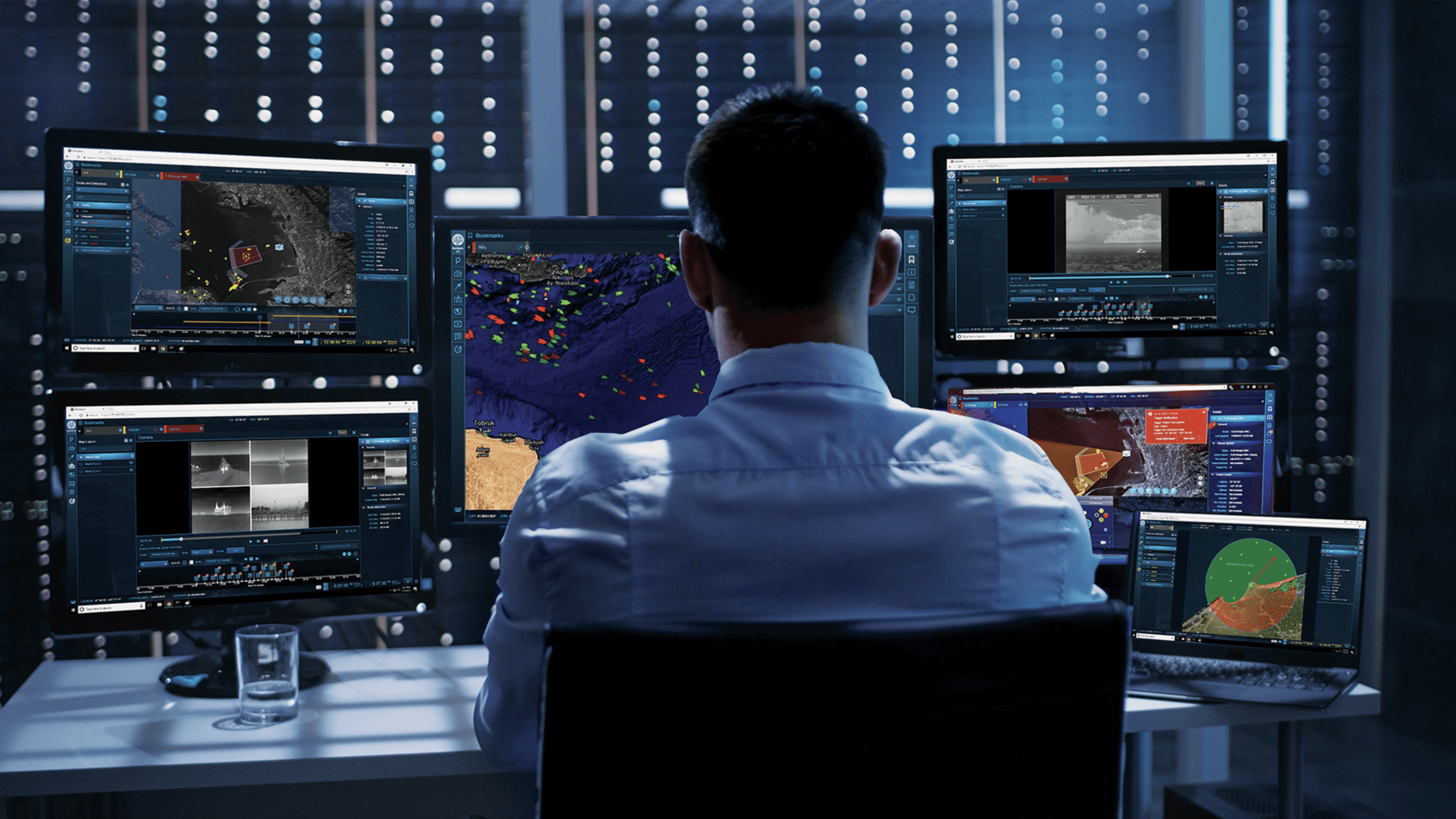
I spent time on-site in command center environments, working directly alongside operators and walking through workflows as they happened.
Being in that environment made it clear how much of the system’s usability depended on the adjustments operators were making in real time. They developed their own paths through the interface—skipping steps, cross-referencing information manually, missing entire features because they were difficult to find, and avoiding areas that introduced friction or uncertainty. Those adjustments became the way the system was used in practice.
The same behaviors showed up across different teams and mission contexts. Once it appeared in more than one environment, it became difficult to treat it as isolated.
The issues pointed to a broader disconnect between how the system was understood and how the work was actually being carried out.
That on-site exposure also made the physical environment impossible to ignore. Operators were working long sessions in low-light command centers, often across multiple displays. The existing color palette increased eye strain, and workstation configurations didn’t support how they were actually moving through the space. Those factors weren’t part of the original design, but they directly impacted how the system was experienced in use.
Why I Was Brought In
Rebuilding the System While It Was Running
I defined the system as a technology-agnostic CSS framework, structured around a shared set of variables with a pre-processor that allowed those variables to be used directly in code. It included core components and a set of atomic utility classes covering themes, layout, typography, grids, forms, animations, transitions, and a custom icon library.
That foundation allowed the experience to scale across products without fragmenting.
In parallel, we developed the new platform over the course of a year—mapping workflows, refining interaction models, and aligning the system across use cases. The work required close coordination with engineering, as the redesign also drove a broader technical refactor to support consistency and maintainability.
At the same time, the executive team asked that the most impactful changes be introduced into the existing Ageon platform where feasible. I identified opportunities to apply those improvements without placing additional strain on the legacy back-end, incrementally improving the live system while the new platform was being built.
The result was a fully realized system that stood apart from the original Ageon. Rather than replacing the existing product and its legacy back-end, the decision was made to run the new platform alongside it.
Ageon ISR Redesign
Scaling the System (Novetta)
Designing the Team
I began by working across multiple products directly, applying the same approach in different contexts and identifying what could translate across them. That phase clarified the shape of the team that needed to exist.
I hired a team with strategic intention—bringing together a cross-section of capabilities across interaction design, systems thinking, visual design, data visualization, and research—so the work could cover the full surface area of the products without fragmenting.
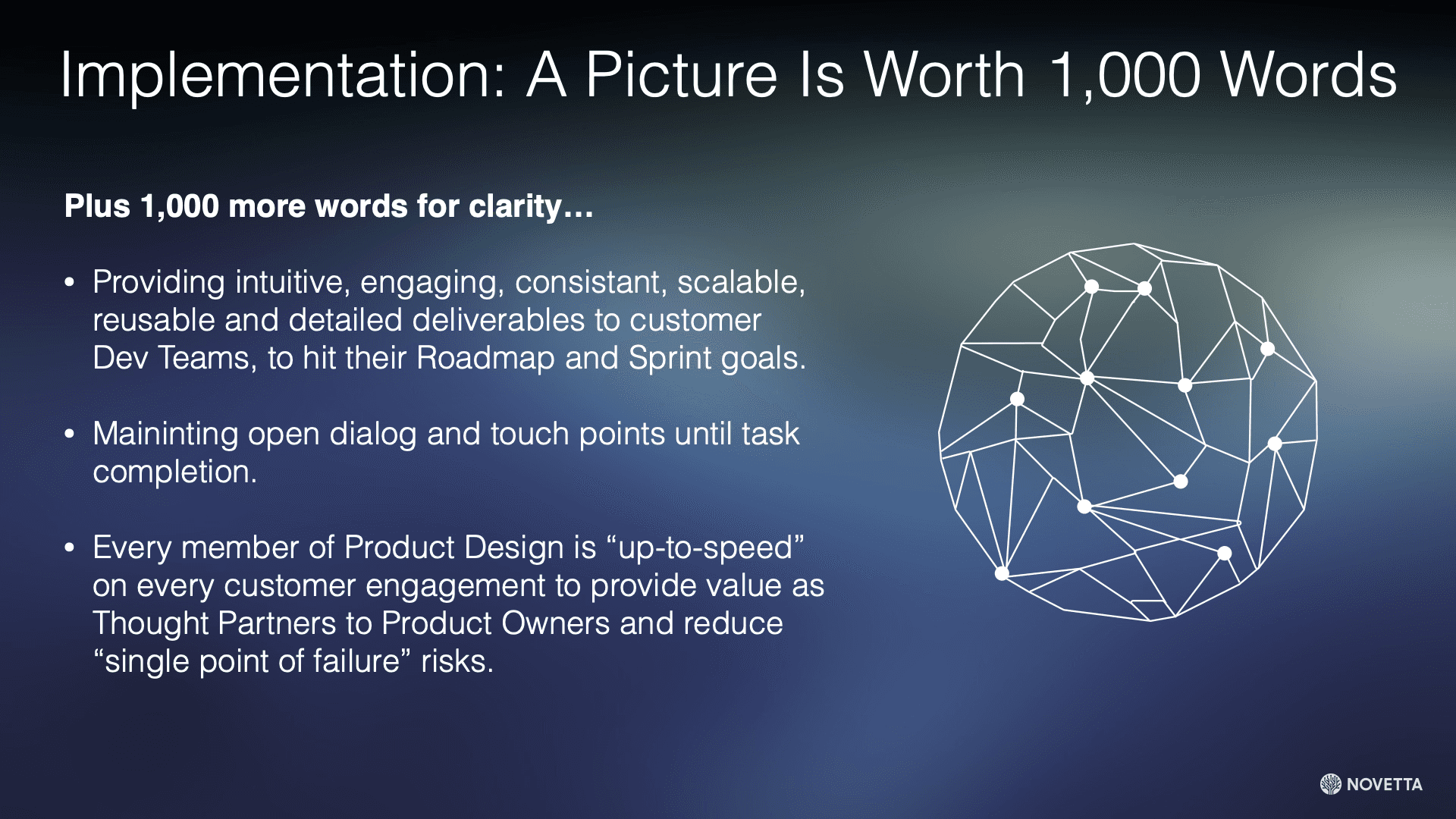
I assigned designers as strike teams to engage with specific products, but the work stayed connected. Context moved across the group, and patterns identified in one system were applied in others.
That shared awareness reduced friction and increased velocity.

Establishing the Division
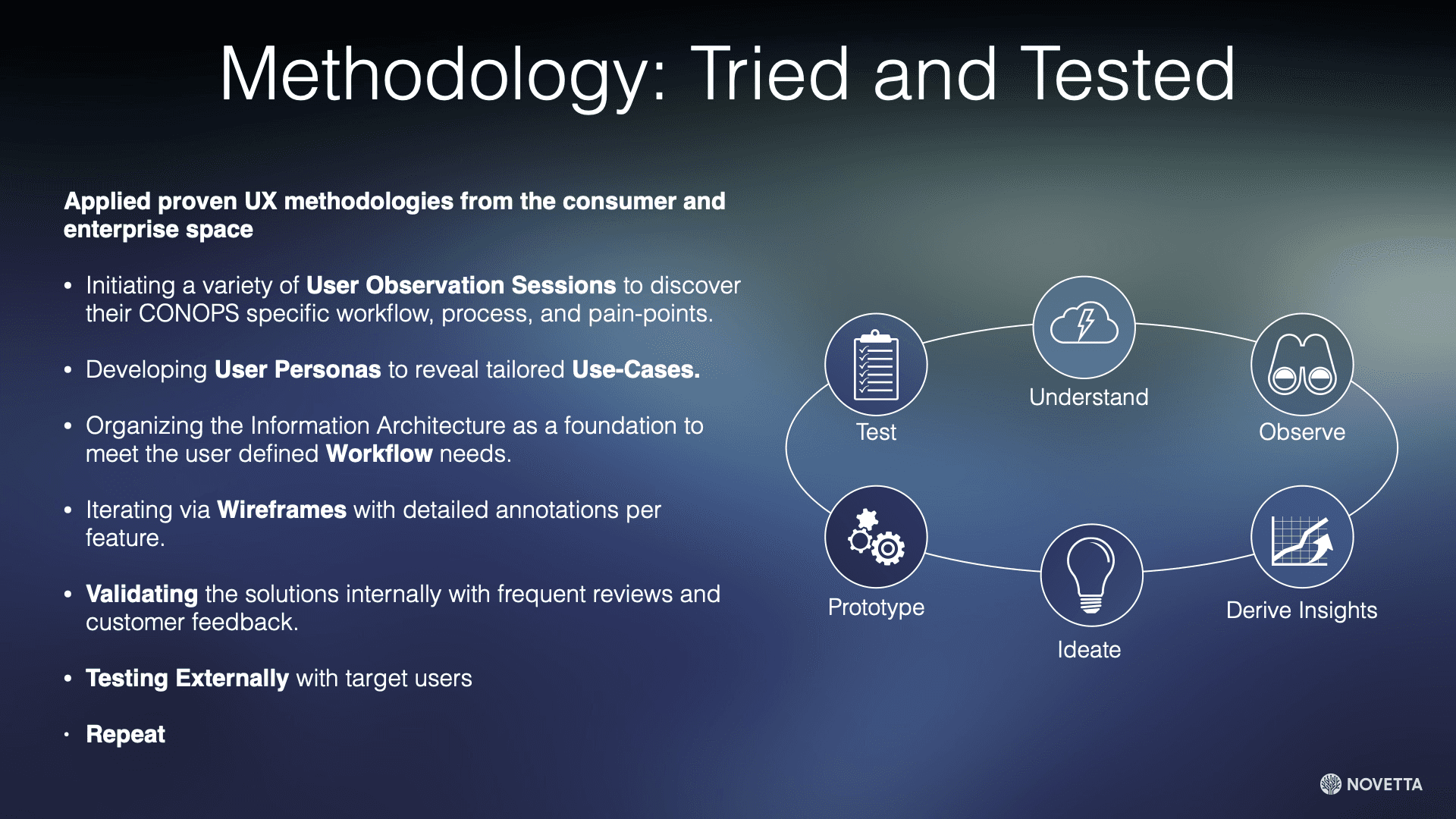
That included securing time with their users in the field. I asked for access to customers in their operating environments so we could understand how each system was actually being used, rather than relying on internal assumptions.
Once the work began, I assigned designers as strike teams to engage with specific products, while keeping design thinking and communication centralized. Each team owned its product relationships, but the work itself remained shared. We reviewed problems together, carried context across the group, and developed solutions collectively so they could scale across the suite rather than stay isolated to a single product.
Art Direction & System Foundation
System Design & Wireframing
I defined the system at the workflow level before it was implemented, working across products to map how each one needed to behave under real conditions.
That work translated into thousands of wireframes across the portfolio—covering identity intelligence, entity resolution, cybersecurity analytics, open-source intelligence, and geospatial systems. The volume was intentional. It allowed me to work through flows in detail, resolve complexity early, and establish patterns that could be applied across the suite.
I partnered closely with product owners and technical leads on each product to ensure their domain expertise was represented. The goal was to avoid designing in a vacuum and to ground decisions in both operational use and system constraints.
As patterns began to repeat across products, opportunities for reuse became clear. Not every component or workflow needed to be rethought. In many cases, structures could be adapted across use cases, allowing the system to scale through consistency rather than constant reinvention.
The wireframes weren’t deliverables. They were the working model of the system—used to align product, engineering, and stakeholders around how everything connected, and to ensure decisions made in one area could scale across others.
Product Narrative & Patterns
I developed a series of product narrative films to make the system visible before and during development.
Some focused on existing functionality. Others explored features that were still being defined. Together, they showed how workflows connected across the portfolio and how the system would operate in practice.
These were used directly with clients, stakeholders, and internal teams to communicate direction and build confidence in the product as it evolved.
I handled the full production—writing, editing, voiceover, and scoring—so the narrative remained consistent from concept through presentation.
This became a way to align teams early, validate direction, and move decisions forward before the system was fully built.
Outcome
The work spanned nearly a decade, evolving from a single product redesign into a broader system that shaped the direction of the company.
The Ageon redesign established a new foundation, leading to a next-generation platform that ran alongside the original while introducing immediate improvements to the live system. That work became a contributing factor in Novetta’s acquisition of DRG.
Following the acquisition, the same approach was applied across the portfolio. Products that had been developed independently were brought into alignment, forming a cohesive suite with shared patterns, consistent behavior, and a unified design language.
As new products came online, they were built against that foundation from the start, while existing systems continued to evolve. The suite became a core capability within the environments it served—supporting life-saving operations in defense and directly informing policy decisions at the federal level.
The strength of the platform and its capabilities drew the attention of Accenture, leading to the acquisition of Novetta and its integration into Accenture Federal Services.
The work also had a direct impact on my own trajectory. I was recruited by Cisco to build and lead a new UX practice for their Threat Detection and Response division, assembling an international team and establishing design as a core capability within the organization.